
Article Summary
Batch record management drives compliance, quality, and efficiency in pharmaceutical manufacturing. FDA cited documentation violations in 38% of warning letters issued during FY2023.
Facilities that follow batch record management best practices reduce audit findings by 60-75%, cut batch release times by 40%, and prevent costly delays. This guide covers regulatory requirements, proven batch record management best practices for record creation and review, electronic system advantages, and metrics that matter.

What Are Batch Records and Why Do They Matter?
Batch records document every step of pharmaceutical production. Each record serves as proof that manufacturers followed approved procedures and met quality standards.
FDA regulation 21 CFR 211.188 requires batch production and control records to include complete information on each batch. This includes dates, equipment identification, material quantities, test results, operator signatures, and actual yields.
The quality control unit must review these records before release per 21 CFR 211.192. Without accurate batch records, facilities cannot prove compliance or trace problems when they occur.
Regulatory Framework for Batch Record Management Best Practices
FDA expects manufacturers to maintain comprehensive documentation systems. Multiple regulations address different aspects of record creation, review, and retention.
Core FDA Requirements:
| CFR Section | Title / Requirement | Key Points |
| 21 CFR 211.100 | Written Procedures for Production and Process Control | – Requires documented SOPs for all aspects of production and process control. – Ensures consistent quality and compliance. |
| 21 CFR 211.180 | General Requirements for Records and Reports | – Records must be maintained throughout the retention period. – Must be readily available for authorized inspection. |
| 21 CFR 211.186 | Master Production and Control Records | – Must include complete formulas, specifications, and detailed production instructions. – Operators must follow these records during manufacturing. |
Data Integrity and Electronic Records
When facilities use electronic systems, 21 CFR Part 11 governs electronic records and signatures. Compliant systems must:
- Validate software before use
- Generate accurate and complete copies
- Protect records with secure access controls
- Create audit trails for all changes
- Use electronic signatures that meet Part 11 requirements
FDA issues Form 483 observations when electronic batch record systems lack proper validation or audit trail functionality. These technical gaps represent serious compliance risks.
Best Practices for Master Batch Record Development
Master batch records serve as the template for all production. Quality depends on clear, unambiguous instructions that operators can follow without confusion.
- Create Detailed Step-by-Step Instructions
Each manufacturing step needs specific details. Vague instructions like “mix thoroughly” create inconsistency. Better approaches specify:
- Exact equipment identification (e.g., “Mixer V-123”)
- Precise process parameters (time, temperature, speed)
- Acceptance criteria for each step
- Required documentation and signatures
- Design Records with Error Prevention in Mind
Smart record design prevents common mistakes before they happen. Effective templates include:
| Feature / Element | Purpose / Benefit |
| Required fields | Operators cannot skip essential entries, ensuring complete documentation. |
| Pre-printed units | Prevents confusion between units (e.g., kg vs g, minutes vs hours). |
| Calculation worksheets | Formulas are already shown to reduce errors in calculations. |
| Yes/No checkboxes | Simplifies decision recording and avoids ambiguity compared to blank spaces. |
| Adequate entry space | Ensures legible handwriting and accurate record-keeping without cramped entries. |
- Involve Manufacturing Staff in Template Design
Operators who execute batch records daily spot practical problems that engineers might miss. Their input during template development prevents workflow issues and unclear instructions.
Facilities that skip operator involvement often discover problems only after production starts. Then corrections require change control, validation updates, and training – all avoidable delays.
Execution and Real-Time Documentation Standards
Following batch record management best practices during real-time documentation ensures accurate, auditable, and compliant records.
- Document Activities as They Occur
Real-time documentation prevents memory errors and backdated entries. Operators should record data immediately after each step or measurement.
FDA expects contemporaneous documentation. When inspection trends show entries made hours or days after production, inspectors question data authenticity.
- Verify Critical Data Points
High-risk steps need verification beyond single-person entry. Common verification approaches include:
- Two operators independently check material additions
- Supervisors witness and sign critical process parameters
- Quality unit personnel verify in-process test results
- Second person reviews all yield calculations
- Handle Corrections Properly
Mistakes happen during documentation. Proper correction methods maintain data integrity while FDA regulations require:
Single line through the error so original entry remains readable Correct value written clearly near the mistake Initials and date of person who made the correction Reason for the change documented nearby
Some facilities struggle with understanding the difference between how paper batch records vs electronic systems handle corrections. Electronic systems track all changes automatically through audit trails, while paper records need manual correction procedures.
Batch Record Review Process Requirements
Quality review catches errors before product release. Thorough review prevents non-conformances from reaching patients.
Establish Tiered Review Levels
Most facilities use multiple review stages:
Level 1 – Operator/Line Clearance Review: Verify record completeness, check all required signatures appear, confirm all data fields contain entries
Level 2 – Production Supervision Review: Validate yields fall within acceptable ranges, review process deviations and their documentation, ensure procedural compliance throughout manufacture
Level 3 – Quality Unit Review: Assess critical quality attribute results, evaluate impact of any deviations, approve or reject batch for distribution
This tiered approach catches different error types at appropriate levels. Production staff spot execution problems while quality reviewers focus on compliance and product specifications.
Use Standardized Review Checklists
Checklists prevent reviewers from missing critical elements. Comprehensive batch record review process checklists should verify:
| Review Element | What to Check | Common Issues |
| Signatures | All required signatures present and legible | Missing operator initials, unclear signatures |
| Dates | All dates present and chronologically logical | Future dates, dates before material receipt |
| Calculations | All math correct and formulas shown | Transcription errors, wrong units |
| Test Results | All results within specifications | Missing data, out-of-spec results not addressed |
| Deviations | All deviations documented and investigated | Undocumented changes, incomplete investigations |
| Material Traceability | All lot numbers recorded | Missing lot numbers, illegible entries |
Set Review Turnaround Targets
Batch release speed affects customer satisfaction and cash flow. Best-in-class facilities complete quality review within:
- Simple oral solids: 3-5 days
- Complex formulations: 5-7 days
- Sterile injectables: 7-10 days
- Biological products: 10-15 days
When facilities consistently miss these targets, the root cause often traces to poor batch record quality that triggers extended investigations.
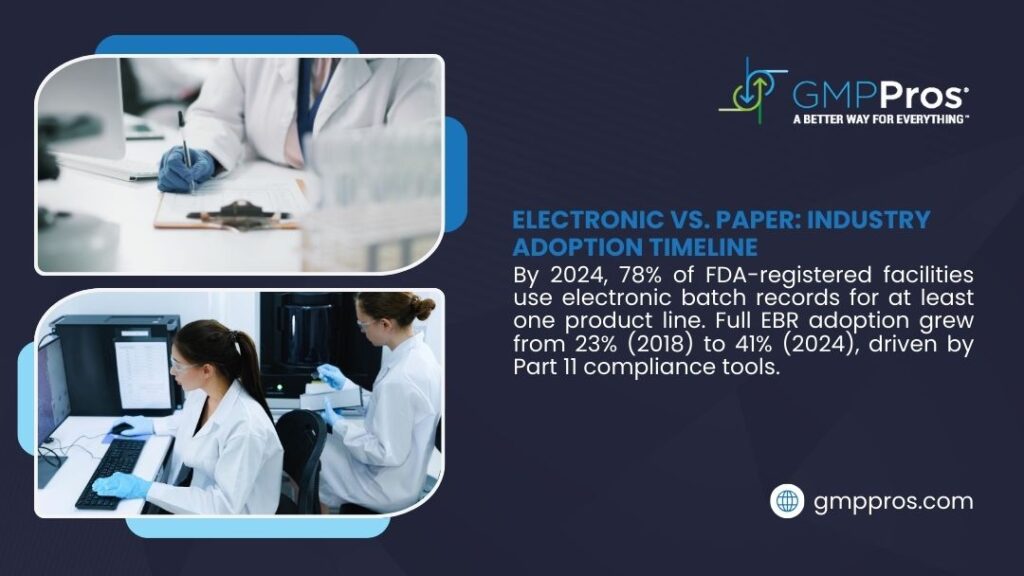
Electronic Batch Records: Implementation Best Practices
Electronic batch record systems eliminate entire categories of errors that plague paper documentation. However, implementation requires careful execution.
Select Systems That Match Your Manufacturing Workflow
Generic EBR software often forces workarounds when it does not match actual production steps. Successful implementations start with:
- Detailed workflow mapping before vendor selection
- Vendor demonstrations with your actual procedures
- Pilot testing on representative products
- Operator feedback on system usability
Validate Electronic Systems Thoroughly
FDA expects robust validation per 21 CFR Part 11 requirements. Validation must demonstrate:
- System correctly performs all intended functions
- Security controls prevent unauthorized access
- Audit trails capture all data changes
- Electronic signatures meet Part 11 criteria Data cannot be altered without detection
Validation documentation should cover installation qualification (IQ), operational qualification (OQ), and performance qualification (PQ) protocols with objective acceptance criteria.
Integrate Automated Data Capture
Equipment integration provides the greatest error reduction. Direct data capture from instruments eliminates transcription mistakes entirely.
Priority integration targets include:
- Temperature and pressure sensors
- Weight scales and filling equipment
- Analytical instruments (HPLC, spectrophotometers)
- Process control systems
- Environmental monitors
One facility reported that electronic batch records reduced transcription errors by 95% compared to their previous paper system. The reduction came primarily from automated data collection rather than just electronic documentation.
Train Users on Both System and Compliance
Operators need technical training on how to use the EBR system plus compliance training on data integrity principles. Training should address:
- System navigation and data entry
- Electronic signature requirements
- How to handle system errors or outages
- Data integrity and ALCOA+ principles
- When and how to document deviations
Handling Deviations and Non-Conformances
Every deviation from approved procedures requires documentation within the batch record. How facilities handle these events demonstrates quality culture.
Document Deviations Immediately
Operators must report deviations when they occur, not hours or days later. Immediate documentation includes:
- Exact description of what happened
- When the deviation occurred
- Who discovered it
- Immediate actions taken
Some facilities see patterns of similar batch record errors in pharma that trace back to procedure inadequacies rather than operator mistakes. Deviation analysis reveals these systemic issues.
Conduct Thorough Impact Assessments
Quality unit personnel evaluate whether deviations affect product safety, identity, strength, quality, or purity. The assessment must:
- Consider potential impact on critical quality attributes
- Review relevant specification limits and acceptance criteria
- Determine whether additional testing proves necessary
- Evaluate whether batch remains acceptable for intended use
Link Deviations to CAPA Systems
Repeat deviations signal process or procedure problems that need permanent solutions. Effective CAPA systems:
- Investigate root causes beyond obvious symptoms
- Implement corrective actions that prevent recurrence
- Verify effectiveness of corrective actions
- Track trends across multiple deviations
Archiving, Retention, and Retrieval Strategies
FDA inspections often request batch records from months or years earlier. Facilities must retrieve these documents quickly.
Follow Regulatory Retention Requirements
21 CFR 211.180(c) requires facilities to retain batch records for at least one year after expiration date or three years after distribution, whichever is longer.
Biological products face longer retention per 21 CFR 600.12: facilities must keep records for two years after expiration date or five years after distribution to the last lot.
Design Archive Systems for Rapid Retrieval
Whether paper or electronic, archive systems need organization that supports quick location of specific batches. Effective approaches include:
- Chronological filing by batch manufacture date
- Product-based organization with batches grouped by SKU
- Lot number indexing that allows direct search
- Digital scanning of paper records with OCR capability
Target retrieval time: any batch record available within 30 minutes of request. Inspectors expect immediate access to documentation during facility inspections.
Protect Records from Damage or Loss
Physical records face risks from fire, water damage, and deterioration. Electronic records face risks from media degradation, system failures, and cyber threats.
Protection strategies include:
- Climate-controlled storage for paper records
- Backup copies stored at separate locations
- Regular testing of archive media readability
- Documented disaster recovery procedures
- Access logs that track who views archived records
Common Mistakes in Batch Record Management and How to Avoid Them
By using batch record management best practices, facilities can avoid common documentation mistakes, improve audit readiness, and strengthen quality culture.
Mistake 1: Inadequate Training on Documentation Requirements
New operators often make documentation errors because training focused on production steps rather than record completion. Better approaches provide:
- Dedicated documentation training separate from technical procedures
- Practical exercises with sample batch records
- Competency assessments that verify documentation skills
- Regular refreshers that address common error patterns
Mistake 2: Templates That Do Not Match Actual Manufacturing
When master batch records differ from actual production steps, operators make workarounds. These deviations become the norm but remain undocumented.
The solution requires periodic review of master records against current practice, with updates when processes evolve. Change control should facilitate necessary template improvements rather than block them.
Mistake 3: Insufficient Review Before Batch Release
Rushed reviews miss errors that thorough examination would catch. Facilities under production pressure sometimes shortcut the review process.
Batch record management best practices require adequate review time regardless of schedule pressure. Rush releases that later need recall cost far more than brief delays for proper review.
Mistake 4: Poor Deviation Investigation
Superficial investigations that blame “operator error” without deeper analysis miss systemic problems. True root cause analysis asks why the error occurred and what system failures allowed it.
Effective investigations consider:
- Was training adequate for the task?
- Were procedures clear and current?
- Did fatigue or workload contribute?
- Could process or record design prevent recurrence?
Mistake 5: Inconsistent Application of Procedures
When some operators follow procedures differently than others, batch records show unexplained variation. This inconsistency raises FDA concerns about process control. To better understand and proactively address these vulnerabilities, facilities should review batch record documentation gaps during inspections, which provides practical guidance on identifying and closing gaps before FDA scrutiny.
Regular audits should verify that all operators complete batch records the same way. Variations signal the need for additional training or procedure clarification.
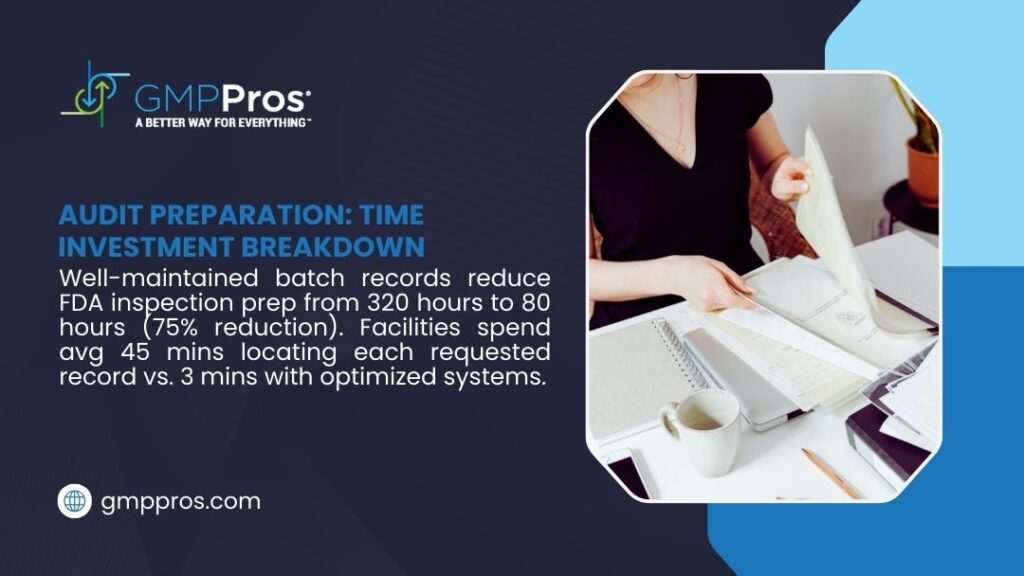
How GMP Pros Helps Facilities Implement Best Practices
GMP Pros embeds experienced engineers with FDA-regulated manufacturers to transform documentation systems from compliance burdens into efficiency drivers.
Our team brings hands-on expertise in electronic batch record implementation, manufacturing execution system integration, and data integrity program development. We work side-by-side with your operators and quality staff to design solutions that fit your actual workflows.
The GMP Pros approach combines technical depth with practical execution:
- Assessment: We evaluate current documentation processes and identify specific improvement opportunities
- Design: Our engineers configure EBR systems and workflows that match your production reality
- Validation: We develop validation protocols that satisfy FDA requirements without unnecessary complexity
- Training: We train your team on both system operation and data integrity principles
- Support: We remain on-site through go-live and stabilization to ensure successful adoption
Contact GMP Pros today to discuss how our embedded engineering services can help your facility implement batch record management best practices that deliver measurable compliance and efficiency improvements.