Article Summary:
- cGMP manufacturing requirements set the basic rules for how pharmaceutical companies make, test, and document their products
- FDA regulations in 21 CFR Parts 210 and 211 spell out what drug manufacturers must do to stay compliant
- Main areas include worker training, building design, equipment checks, production steps, and record keeping
- Breaking these rules leads to warning letters, shutdowns, or even criminal charges
- Computer systems help with compliance but need extra checks to make sure data stays accurate
Companies that make FDA-regulated products have to follow strict quality rules. These cGMP manufacturing requirements keep patients safe by setting minimum standards for how products get made, tested, and tracked.
Unlike ISO certifications where you get a certificate, cGMP compliance is required by law. The FDA checks if you follow the rules through surprise inspections at your facility.
This guide breaks down what cGMP actually requires, how companies prove they follow it, and what causes the most problems when the FDA shows up.
What Are cGMP Manufacturing Requirements?
cGMP manufacturing requirements are the basic FDA rules for making pharmaceutical products, biologics, medical devices, and some foods. The “c” means “current” – your methods need to keep up with new technology and science.
You’ll find these rules in Title 21 of the Code of Federal Regulations (CFR). Parts 210 and 211 cover drug making. Part 820 covers medical devices.
The rules don’t tell you exactly how to do everything. Instead, they say what results you need to achieve. You decide how to get there with your own procedures.
Main cGMP Categories Explained
FDA cGMP regulations split requirements into major groups. Each group covers different parts of your operation.
| Category | What You Need | Where to Find It |
| People | Trained staff, clear job roles, health checks | 21 CFR 211.25-211.28 |
| Buildings | Enough room, good design, climate control | 21 CFR 211.42-211.58 |
| Equipment | Right tools, regular upkeep, proof it works | 21 CFR 211.63-211.72 |
| Making Products | Written steps, checks during work, batch logs | 21 CFR 211.100-211.115 |
| Testing | Test programs, quality specs, lab controls | 21 CFR 211.160-211.176 |
| Records | Complete files, batch papers, complaint logs | 21 CFR 211.180-211.198 |
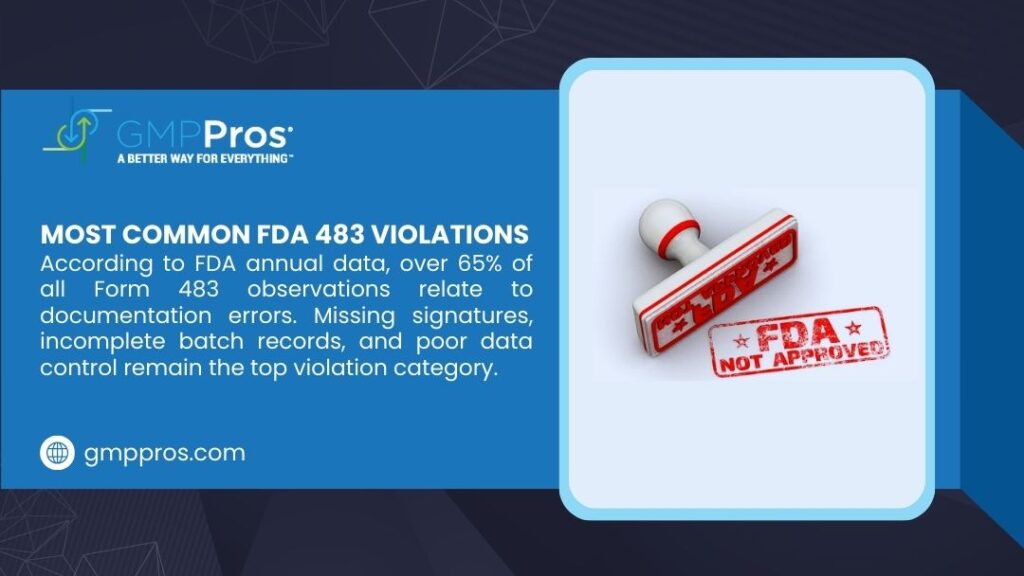
From our work with FDA-regulated plants, most failures happen because of bad paperwork – not because the actual work is wrong. Companies often do things right but don’t write it down the way regulators want to see it.
Learning about pharma regulatory compliance shows you how cGMP fits with all the other FDA rules companies deal with.
How FDA Inspections Work?
The FDA checks pharmaceutical manufacturing standards through regular visits to your facility. They don’t call ahead – inspectors just show up. Visits can last a few days or several weeks.
| Inspection Type | Why They Come | How Often | What Happens If You Fail |
| Pre-Approval | Check if you can make the product before approval | Once before launch | Your application gets delayed |
| Routine Check | Make sure you still follow rules | Every 2-4 years | Warning letters, import bans |
| Problem Investigation | Look into specific issues | Whenever needed | Production stops, product recalls |
| Foreign Facility | Check overseas plants | Less often | Cannot ship to the U.S. |
The FDA publishes what they find using Form 483 and warning letters. You have to respond with a plan to fix the problems and stop them from happening again.
The FDA website has official guides that help you understand what they expect.
Worker Training and Job Roles
cGMP training requirements say everyone needs the right education and practice for their job. You must write down all the training and prove it actually works.
| Job Title | What They Need | What They Do |
| Quality Control | Science degree and training | Check and approve all procedures and records |
| Production Boss | Good education and experience | Watch over production, make sure people follow rules |
| Quality Assurance | Science background | Review quality systems, look into problems |
| Lab Workers | Technical training | Run tests the right way |
Everyone who works in production or labs gets trained before they start their actual work. They get refresher training every year to keep their skills sharp.
The quality control team has to be able to say no to bad materials or products. They work separately from production so there’s no pressure to approve things that shouldn’t pass.
Building and Equipment Rules
Cleanroom standards cGMP rules change based on what you make. Products that need to be sterile have the toughest requirements.
You need enough space so materials don’t get mixed up or contaminated. Different products need separate areas.
| Facility Part | What’s Required | How You Prove It |
| Layout | Smart flow that stops contamination | Design review documents |
| Climate Control | Track temperature, humidity, air quality | Systems that check 24/7 |
| Cleanrooms | Meet ISO 14644 rules for sterile work | Regular particle tests |
| Water Systems | Clean water for products | Daily tests and checks |
| Equipment Checks | Four-step validation (DQ, IQ, OQ, PQ) | Written test results |
For sterile products, check out sterile pharmaceutical manufacturing to learn more about special environment needs.
Paperwork and Batch Records
cGMP documentation requirements mean you need complete, accurate records of everything you do. The FDA cares as much about your paperwork as your actual work.
| Paper Type | Why You Need It | How Long to Keep It |
| Master Records | Show the complete process | Product life + 3 years |
| Batch Records | Track each batch you make | 1 year past expiration |
| Standard Procedures | Explain how to do tasks | Current + old versions |
| Problem Reports | Look into what went wrong | Forever |
| Change Records | Track and approve changes | Forever |
| Validation Files | Prove your process works | Product life |
Batch record requirements mean you write down every single step for every batch. Your records show who did what, when they did it, and what happened.
More companies now use electronic batch record system software. It cuts down on errors and keeps data safer than paper files.
Making Products and Proving Your Process Works
Manufacturing process validation shows that your steps consistently make good products that meet your standards.
| Type | When You Use It | What Data You Need |
| Prospective | New products or new methods | 3 successful batches in a row |
| Concurrent | Products already sold | Keep checking as you make them |
| Retrospective | Old, stable products | Past data from many batches |
You need controls to stop contamination and mix-ups. Written steps must exist for every part of making the product. Checks along the way make sure things stay on track.
Understanding manufacturing process improvement helps you use validation data to make things better while staying compliant.
Testing and Quality Control
Quality assurance in manufacturing means you have a quality control team that can approve or reject materials and products.
| What Gets Tested | What You Check | How Often |
| Raw Materials | Identity, strength, quality, purity | Every batch before use |
| During Production | Important steps while making it | Based on your procedures |
| Finished Products | All release requirements | Every batch before shipping |
| Stability | Make sure expiration dates are right | Ongoing program |
| Backup Samples | Keep some to investigate later | 1 year past expiration |
Your lab must use test methods that have been validated. Equipment needs to be calibrated. The quality team reviews everything before releasing a batch.

Common Problems During Inspections
From my work with pharma manufacturers, some issues keep coming up when the FDA visits.
| Problem Type | What Goes Wrong | Why FDA Cares |
| Data Problems | Records dated wrong, changed data, missing info | Trust in your systems |
| Bad Investigations | Surface fixes, don’t find real cause | Quality system doesn’t work |
| Cleaning Issues | No validation proof, weak procedures | Cross-contamination risk |
| Training Gaps | Incomplete records, no skill checks | Worker qualifications |
| Poor Change Control | Changes without review, no revalidation | Loss of process control |
Data integrity violations are really serious. The FDA released specific guidance on what they expect from both paper and computer records.
Weak investigations are a top citation. Companies fix the symptom but don’t figure out why it happened. This means the same problem happens again.
Computer Systems and Part 11 Rules
Electronic systems help with cGMP compliance guidelines but add extra requirements. FDA’s 21 CFR Part 11 sets the rules for electronic records and signatures.
| System Benefit | How It Helps Compliance |
| Real-time data entry | Stops copy errors |
| Auto calculations | No math mistakes |
| Built-in reviews | Can’t skip steps |
| Audit trails | Shows who changed what |
| Search tools | Makes investigations easier |
Computer systems need validation to prove they work right, keep data safe, and block unauthorized changes. You validate them the same way as equipment – DQ, IQ, OQ, PQ.
Get Expert Help With Compliance
If your pharmaceutical, biologics, or animal health plant needs help with cGMP manufacturing requirements, GMP Pros has hands-on engineers and quality experts who know FDA-regulated operations.
GMP Pros puts experienced people right on your team at your facility. This direct approach fixes compliance gaps, builds strong quality systems, and gets you ready for FDA visits.
The team finds and fixes problems while you’re working – when fixes take days, not during FDA inspections when the same issues cause warning letters.
Partner with GMP Pros today and run manufacturing operations that meet FDA standards while working efficiently.
Common Questions About cGMP
What does cGMP mean in manufacturing?
cGMP stands for current Good Manufacturing Practices. “Current” means your methods need to keep up with modern technology. These are required FDA rules for making drugs, biologics, or medical devices.
How often does the FDA inspect facilities?
FDA typically checks U.S. facilities every 2-4 years for routine visits. Foreign plants get checked less often. They come for problem investigations anytime they spot potential issues.
What’s the difference between GMP and cGMP?
GMP means Good Manufacturing Practices in general. cGMP specifically adds “current” to show standards must stay up-to-date with new technology and science.
Can you get a cGMP certificate?
No. Unlike ISO where you get a certificate, cGMP doesn’t work that way. FDA checks if you

comply through inspections. You either follow the rules or face penalties.
What happens if you fail an inspection?
FDA issues Form 483 listing what’s wrong. You must send back a plan to fix it. Serious problems lead to warning letters, consent decrees, or shutdown orders.