Article Summary:
- EBR implementation pharma projects replace paper batch records with digital systems that improve quality and reduce mistakes.
- Drug manufacturers use electronic batch records to speed up batch release, strengthen compliance, and lower operational costs
- Successful projects need a good planning, careful validation, and strong training for both production and quality teams
- Most pharma facilities achieve ROI within 12-18 months through fewer deviations and faster review cycles
- Common failures come from poor system design, low user adoption, and weak integration with manufacturing equipment.
This guide explains how EBR implementation pharma projects work and what separates successful projects from failed ones.
What Is EBR Implementation Pharma?
EBR implementation in pharma is the process of introducing electronic batch records to replace paper batch documents in drug manufacturing.
It involves setting up digital tools that collect, track, and store all production data in a safe and compliant way.
An electronic batch record serves as the legal documentation of how each drug batch was made. It records every process step, material addition, equipment setting, and quality check in real time.
| System Function | How It Works | Quality Benefit |
| Digital Procedures | Shows operators step-by-step instructions | Reduces procedure errors |
| Automatic Data Capture | Pulls values directly from equipment | Eliminates transcription mistakes |
| Electronic Signatures | Validates each user action | Meets FDA Part 11 requirements |
| Built-in Calculations | Performs math without manual input | Prevents calculation errors |
| Complete Audit Trails | Tracks every change made | Supports data integrity reviews |
Paper systems require operators to write everything by hand. Electronic batch record systems guide users through each step while capturing data automatically from connected manufacturing equipment.
Why Pharma Manufacturers Move to Electronic Batch Records
Paper batch records cause problems that grow worse as production volume increases. Every handwritten entry creates error risk. Every calculation needs double-checking. Every signature requires verification.
The case for EBR implementation pharma becomes clear when you compare paper versus electronic operations.

Error Reduction
Manual data entry causes 30-40% of all batch record deviations in pharma facilities that still use paper. Operators copy readings from equipment displays, calculate values by hand, and complete forms during production pressure.
Electronic systems pull data straight from equipment. Automated calculations remove human error. Required fields prevent incomplete documentation.
| Error Source | Paper Frequency | Electronic Frequency |
| Wrong transcription | 15-20 per 1000 entries | Near zero with automation |
| Math mistakes | 5-8 per 1000 calculations | Eliminated by system |
| Missing approvals | 10-15% of records | System blocks next steps |
| Unreadable writing | 8-12% of notes | Does not apply |
Faster Review and Release
Quality teams spend hours checking paper batch records. They verify calculations, confirm signatures, and cross-reference deviation reports manually. Electronic systems do these checks automatically as production happens.
Most pharma facilities cut batch review time by 50-70% after EBR implementation pharma projects complete. This speed directly affects inventory costs, customer deliveries, and cash flow.
Stronger Data Integrity
FDA data integrity guidance published in 2018 raised expectations for how drug manufacturers manage records. Paper systems struggle to meet ALCOA+ principles that FDA inspectors look for during audits.
Electronic batch record system designs build these principles in from the start. Every action gets a timestamp and user ID. All changes create audit trails. Nobody can alter data without detection.
EBR Implementation Pharma Process Steps
Successful projects follow a structured path that addresses technical needs, regulatory requirements, and organizational change.
Step 1: Assessment and Planning (2-3 Months)
The first phase examines current operations to find requirements and constraints.
Key work includes mapping existing paper batch records, identifying equipment that provides data, analyzing gaps between current and target states, and planning resources for project work.
| Planning Topic | Key Questions | Output Document |
| Process Review | Which products go electronic first? | Implementation priority list |
| System Needs | What must the system do? | Requirements specification |
| Equipment Links | Which machines provide data? | Interface requirements |
| Validation Plan | How do we prove it works? | Validation master plan |
Careful planning prevents most implementation problems. Pharma compliance teams that rush this phase hit unexpected issues during validation and testing.
Step 2: System Setup and Build (3-6 Months)
Configuration turns requirements into a working system. This phase builds the electronic workflow operators will follow daily.
Main tasks include setting up batch workflow templates, building equipment connections for data collection, configuring user roles and electronic signature rules, and creating reports for batch review.
The system must enforce GMP requirements automatically. Critical process parameters should trigger alerts when values fall outside acceptable ranges.
Step 3: Validation Work (2-4 Months)
Validation proves the system works correctly and meets FDA requirements. This follows standard steps: Design Qualification, Installation Qualification, Operational Qualification, and Performance Qualification.
| Validation Phase | Test Focus | Pass Criteria |
| Design Qualification (DQ) | Requirements match intended use | All requirements link to design |
| Installation Qualification (IQ) | System installed correctly | Configuration matches design |
| Operational Qualification (OQ) | Functions work properly | All features perform right |
| Performance Qualification (PQ) | System works in production | Batches run successfully |
Testing must cover normal work, edge cases, and error conditions. What happens if an operator enters a wrong value? How does the system handle equipment failures? Can users skip required steps?
Validation documentation for complete EBR implementation pharma projects often exceeds 1,000 pages.
Step 4: Training and Change Support (2-3 Months)
New systems fail without proper training. Operators comfortable with paper records need time to learn electronic workflows.
Good training programs include hands-on practice in test environments, role-specific instruction for different job functions, troubleshooting common problems, and ongoing support during first production runs.
Change support addresses the human side. Some operators resist new systems. Production supervisors worry about slowdowns. Quality teams fear new compliance risks.
Handle these concerns through clear communication, involvement in design choices, and visible leadership support.
Common EBR Implementation Pharma Challenges
| Challenge | Root Cause | Fix |
| Low User Adoption | System too complex or slow | Involve users early, simplify workflows |
| Equipment Connection Failures | Unreliable communication | Test interfaces thoroughly, plan manual backup |
| Validation Delays | Requirements keep changing | Lock requirements before build starts |
| Slow Performance | System can’t handle user load | Size infrastructure right, optimize database |
| Weak Change Control | Updates bypass approval | Set up clear change management |
Equipment Integration Issues
Most pharma facilities use equipment from different vendors. Making these systems talk reliably needs careful interface design and extensive testing.
Equipment uses different communication methods, reports data in various formats, and runs on different network types. Each connection needs validation to prove it captures accurate data.
Some facilities start with manual data entry before adding automatic connections. This reduces initial complexity while still getting benefits of electronic records.
User Resistance
Operators who used paper records for years view electronic systems with doubt. They see new systems as extra work, not help.
This resistance hurts EBR implementation pharma success. Without user support, adoption stalls, workarounds appear, and benefits don’t happen.
Fight resistance through early involvement, clear benefit messages, and responsive support during transition. Show operators how the new system makes their work easier.
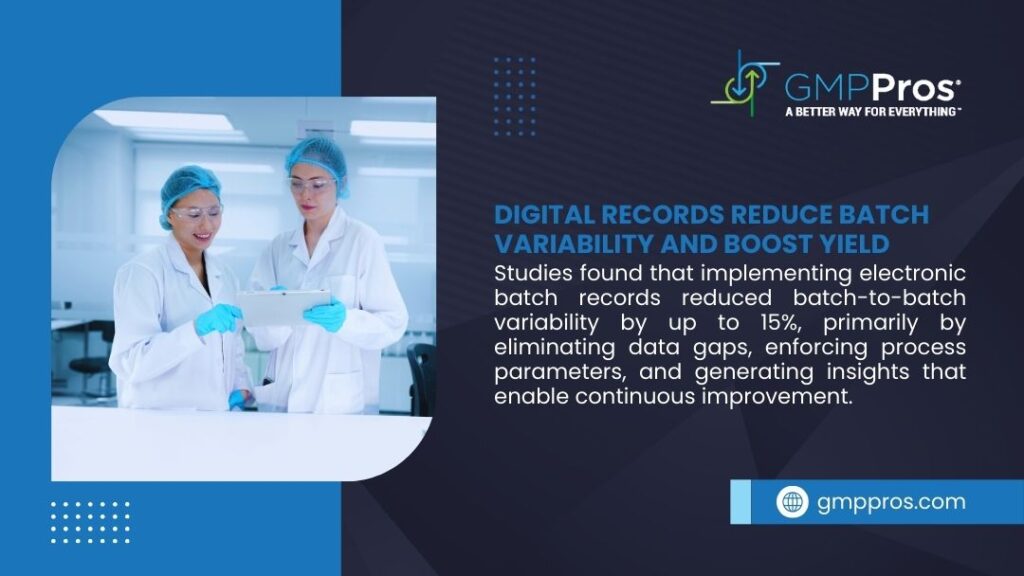
EBR Implementation Pharma Timeline and Budget
Realistic timelines help set proper expectations and allocate resources effectively.
| Project Size | Duration | Team Size | Budget Range |
| Single Product Line | 9-12 months | 4-6 people | $200K-$500K |
| Multiple Products | 12-18 months | 6-10 people | $500K-$1.5M |
| Full Manufacturing Site | 18-24 months | 10-15 people | $1.5M-$3M+ |
These timelines assume adequate resources, clear requirements, and reasonable scope control. Projects expand when requirements change frequently, validation finds major issues, or priorities shift.
The team needs different skills including process engineers who understand production workflows, IT staff for system setup and infrastructure, quality professionals for validation and pharma regulatory compliance, and project managers to coordinate work.
Many facilities partner with consulting firms that specialize in EBR implementation pharma. External expertise speeds projects and avoids common mistakes.
Validation Requirements for Pharma Electronic Batch Records
Computer systems validation follows FDA guidance in 21 CFR Part 11 (available at FDA.gov). The system must maintain data integrity, prevent unauthorized changes, and create complete audit trails.
Meeting 21 CFR Part 11 Standards
Part 11 sets criteria for electronic records and electronic signatures in pharma manufacturing.
Key requirements include:
- System validation for accuracy and reliability
- Ability to generate accurate record copies
- Protection of records through retention period
- Use of secure electronic signatures
Your validation package must show compliance with each requirement. This means detailed test cases, complete test execution, and thorough documentation.
| Part 11 Requirement | System Feature | Validation Proof |
| Accurate records | Data capture from equipment | OQ tests show data accuracy |
| Audit trails | Log all user actions | OQ tests verify complete logs |
| Electronic signatures | Unique user authentication | OQ tests check signature controls |
| System access | Role-based permissions | IQ verifies access setup |
Data Integrity Focus
FDA guidance on data integrity for drug manufacturing (published at FDA.gov in 2018) raised expectations for electronic systems. The system must prevent or detect data tampering, maintain complete audit trails, and support full data lifecycle management.
During validation, test scenarios that try to manipulate data. Can users edit completed records? Does the system detect timestamp changes? Are deleted records truly gone or just hidden?
Strong data integrity controls prevent problems during FDA inspections. Facilities with weak controls face warning letters and consent decrees.
Integration with Manufacturing Systems
Electronic batch records don’t work alone. They connect to MES (Manufacturing Execution Systems), LIMS (Laboratory Information Management Systems), ERP (Enterprise Resource Planning), and plant floor equipment.
Proper MES implementation ensures smooth data flow between all these systems.
| System | Data Shared | Integration Difficulty |
| MES | Work orders, material tracking | Medium to High |
| LIMS | Test results, specifications | Medium |
| ERP | Material receipts, batch costs | Low to Medium |
| Equipment | Process data, sensor readings | High |
Integration difficulty depends on system age, vendor support, and available interfaces. Modern systems with open connections integrate easier than old equipment with closed protocols.
Budget extra time and money for integration work. This part causes more delays than any other aspect of EBR implementation pharma projects.
Cost Analysis for EBR Implementation Pharma
Manufacturers need clear ROI numbers to justify project investment. Benefits add up across multiple areas.
Direct Cost Reductions
Paper batch records cost money for printing, storage, and handling. Electronic systems eliminate most of these expenses.
| Cost Area | Annual Paper Cost | EBR Cost | Net Savings |
| Record printing | $50K-$150K | $0 | $50K-$150K |
| Storage space | $20K-$60K | Minimal | $20K-$60K |
| Batch review time | $200K-$500K | $60K-$150K | $140K-$350K |
| Deviation work | $100K-$300K | $30K-$90K | $70K-$210K |
Indirect Value
Harder to measure but equally important are benefits like faster batch release that improves inventory management, better compliance that reduces FDA inspection risks, improved data access that supports process improvements, and stronger audit readiness that cuts inspection prep time.
Most pharma facilities see payback within 18-24 months for complete EBR implementation pharma projects. Smaller, focused deployments may break even within 12 months.
FDA Inspection Expectations
FDA inspectors expect electronic systems to meet specific standards during inspections. They review validation documents, examine audit trails, and test user access controls.
Common inspection findings include weak validation documentation, poor audit trail function, insufficient training records, and inadequate change control procedures.
Prepare for inspections by keeping complete validation packages, doing periodic system reviews, training all users thoroughly, and documenting all system changes properly.
Best Practices for EBR Implementation Pharma Success
| Practice | Why It Helps | How to Do It |
| Start Small | Reduces risk and complexity | Pilot one product before full rollout |
| Involve Users Early | Improves adoption and design | Include operators in requirements and testing |
| Plan Training Well | Ensures effective use | Build complete training before go-live |
| Keep Paper Backup | Provides business continuity | Have plans for system failures |
| Track Results | Proves value and guides fixes | Measure KPIs before and after |
From an engineering standpoint, successful projects balance technical requirements with practical realities. Perfect systems that nobody can use deliver no value.
Focus on simple workflow design. Each extra click, each additional screen, each unnecessary approval adds friction that slows production and frustrates users.
Test extensively before go-live. Find problems in controlled environments rather than during production runs that affect customer deliveries.
GMP Pros: Expert Help for EBR Implementation Pharma
GMP Pros brings hands-on engineering expertise directly to your facility. Our team has completed dozens of electronic batch record projects across pharmaceutical, biologics, and animal health manufacturing.
We work on-site with your teams to plan projects, configure systems, execute validation, train users, and support go-live activities.
Our engineers understand FDA regulations, GMP requirements, and the practical realities of drug manufacturing. We know what works because we’ve done it repeatedly across multiple facilities.
Contact GMP Pros today to discuss your EBR implementation pharma plans and explore how our team can speed your project while ensuring regulatory compliance.
Frequently Asked Questions About EBR Implementation Pharma
How long does EBR implementation pharma take?
Most projects take 12–18 months from planning to go-live for one full production line. A single product setup can finish in 9–12 months if the team has enough resources. Full site projects usually need 18–24 months, depending on complexity.
What does EBR implementation pharma cost?
Costs are usually $200K–$500K for one product line and $1.5M–$3M+ for a whole site. This covers software, configuration, validation, training, and project management. Most pharma sites get their investment back in 18–24 months thanks to fewer errors and faster batch release.
Do we need to validate electronic batch record systems?
Yes, validation is required under 21 CFR Part 11 and FDA guidance. It shows the system works properly, protects data, and meets regulations. The validation package normally includes DQ, IQ, OQ, and PQ documents.
Can we use electronic batch records for all drug products?
Yes, these systems work for almost all products—tablets, capsules, injectables, biologics, and sterile items. It’s best to start with simpler products first, then move to more complex ones to reduce risk and build experience.
What happens if the EBR system fails during production?
Good setups include backup plans. Most sites keep paper procedures that operators can use during outages. When the system comes back online, the electronic system records these manual entries.