
Staff Augmentation vs Consulting for Pharma Projects
Staff augmentation vs consulting for pharma projects: compare control, cost, GMP training, data integrity and validation duties to pick the right model.

Staff augmentation vs consulting for pharma projects: compare control, cost, GMP training, data integrity and validation duties to pick the right model.

Why incomplete batch records cause lot release delays, the 21 CFR risks involved, and how EBR, field validation and parallel review cut QA cycle time.

How out-of-specification results tie back to the batch record: the two-phase investigation, defensible documentation, batch release logic, and the data integrity practices that keep audits clean. A batch record related OOS investigation sits at the seam between the laboratory and the manufacturing floor, and that seam is where most compliance programs stumble. An out-of-specification (OOS)
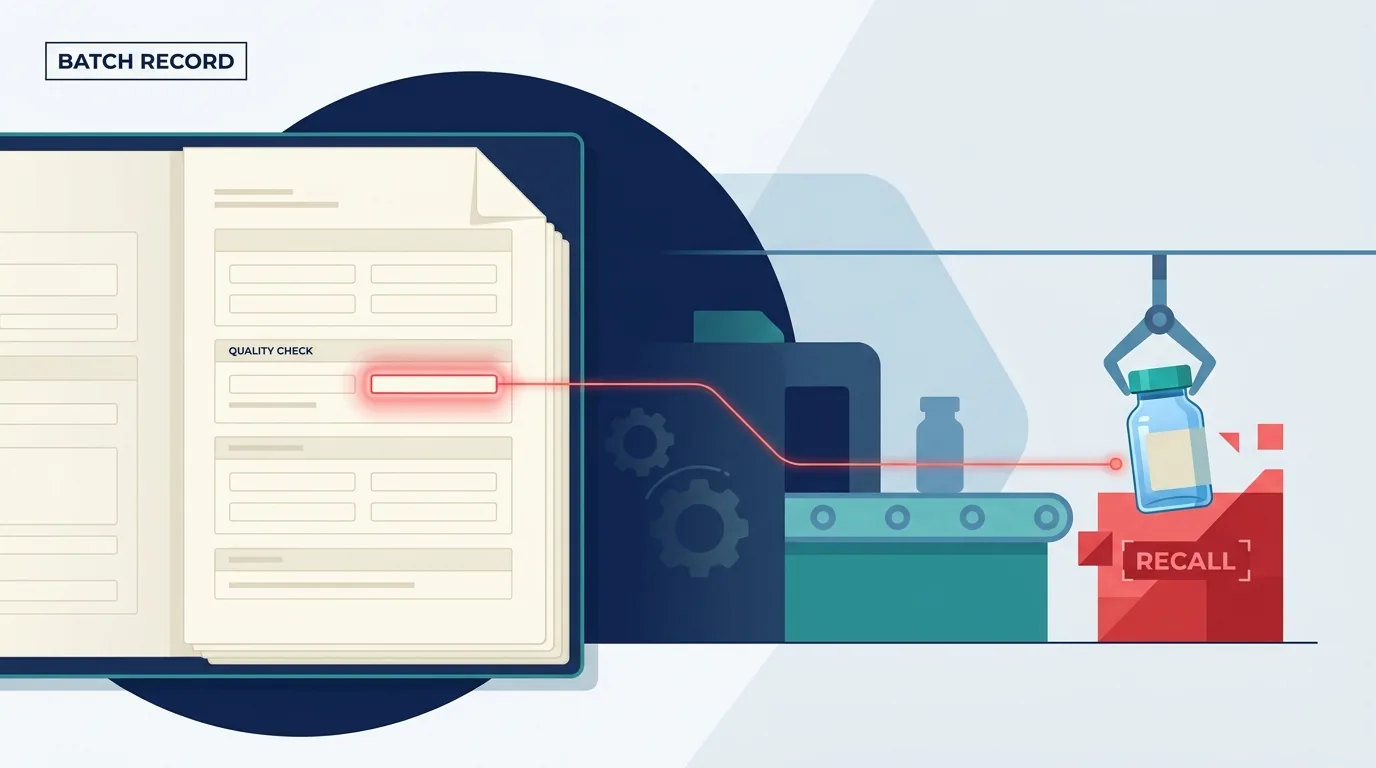
Article summary: Batch record errors are a leading, preventable driver of drug recalls. Preventing batch record-related product recalls depends on four controls that most manufacturers already own but underuse: disciplined record review, hard-gated release workflows, electronic batch record (EBR) and MES systems, and data integrity practices that satisfy FDA scrutiny. This playbook connects each control

Learn why incomplete batch records causing lot release delays occur, common errors behind them, and practical ways to improve release readiness.

Learn why incomplete batch records causing lot release delays occur, common errors behind them, and practical ways to improve release readiness.

FDA ran 694 more inspections in FY 2025. Learn how to prepare batch records for FDA inspection with a step-by-step workflow and pre-audit checklist.

FDA issued 303 drug warning letters in FY 2025. Learn which batch record deficiencies trigger enforcement and how to prevent them.

Learn legacy MES integration with electronic batch records. Explore architecture, compliance, and avoid costly failures in pharma manufacturing.

This guide explains challenges transitioning from paper to electronic batch records and shows how to improve data integrity and avoid compliance issues.